
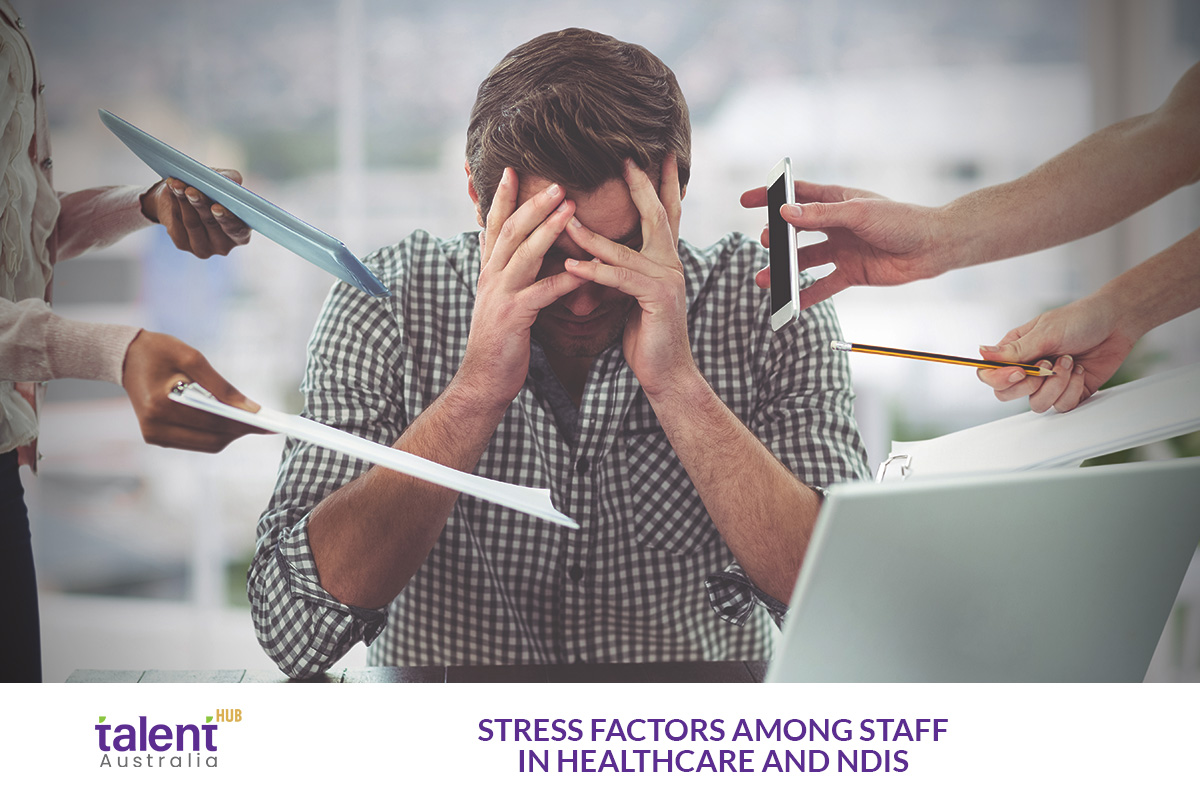
Healthcare and NDIS professionals dedicate their careers to improving the lives of others. While the work is rewarding, it often comes with significant responsibilities and challenges. Across Brisbane and Queensland, many healthcare workers, support workers, nurses, and administrative teams experience workplace stress caused by increasing demands and changing industry expectations. Understanding these stress factors helps organisations create healthier workplaces while supporting staff retention and service quality.
Stress Factors Among Staff in Healthcare and NDIS
The healthcare and disability support sectors continue to experience strong growth throughout Australia. As demand for services increases, staff often face greater workloads and higher expectations.
For employers, recognising the causes of workplace stress is essential. Early intervention can improve employee satisfaction, reduce turnover, and strengthen organisational performance.
High Workloads and Staffing Shortages
One of the most common causes of stress is workload pressure.
Healthcare facilities and NDIS providers often operate in environments where service demand exceeds available workforce capacity. Staff may manage multiple responsibilities throughout a single shift while maintaining high service standards.
Common challenges include:
- Increased participant or patient demand
- Staff shortages
- Extended working hours
- Last-minute roster changes
- Limited time between appointments
When workload pressures continue for long periods, employees may experience fatigue, reduced engagement, and lower job satisfaction.
Emotional Demands of Caregiving
Healthcare and disability support roles involve regular interaction with people facing physical, emotional, or social challenges.
Support workers, nurses, allied health professionals, and carers often build strong relationships with participants and patients. While these connections create rewarding experiences, they can also contribute to emotional strain.
Staff may encounter:
- Complex participant needs
- Difficult family situations
- Emotional conversations
- Crisis management scenarios
- End-of-life care environments
Without adequate support, emotional fatigue can affect both wellbeing and workplace performance.
Administrative and Compliance Pressures
The healthcare and NDIS sectors operate within highly regulated environments.
Staff must complete documentation, maintain records, and follow strict compliance requirements. These responsibilities often occur alongside direct participant support duties.
Common administrative stressors include:
- Documentation requirements
- Incident reporting
- Compliance audits
- Care plan updates
- Regulatory changes
When administrative workloads increase, employees may feel they spend less time focusing on the people they support.
Rostering and Schedule Challenges
Work-life balance remains a major concern for many healthcare professionals.
Shift work, overnight duties, weekend rosters, and changing schedules can disrupt personal routines and family commitments.
Many staff report increased stress when dealing with:
- Unpredictable schedules
- Staff replacements
- Overtime requirements
- Shift shortages
- Limited flexibility
Effective workforce planning can help organisations reduce these pressures and improve employee satisfaction.
Communication and Workplace Culture
A positive workplace culture plays an important role in employee wellbeing.
Poor communication, unclear expectations, and limited support from management can increase stress levels across teams.
Employees often perform better when organisations provide:
- Clear communication channels
- Regular feedback
- Team collaboration
- Professional development opportunities
- Accessible leadership support
Strong workplace cultures encourage engagement and help staff feel valued.
Recruitment Challenges and Workforce Gaps
Recruitment difficulties can create additional pressure on existing employees.
When vacancies remain unfilled, current team members often absorb additional responsibilities. This increases workload demands and can contribute to burnout.
Healthcare and NDIS organisations across Brisbane continue to face competition for skilled professionals.
Access to effective recruitment support helps businesses maintain workforce stability and reduce staffing gaps before they impact service delivery.
Supporting Staff Wellbeing Through Better Workforce Strategies
Reducing workplace stress requires a proactive approach.
Organisations that invest in workforce planning, employee support, and recruitment solutions often achieve stronger retention outcomes.
Practical strategies include:
- Maintaining appropriate staffing levels
- Improving roster management
- Streamlining administrative processes
- Providing employee wellbeing initiatives
- Supporting career development
- Encouraging open communication
These measures help create healthier and more sustainable workplaces.
How Talenthub Australia Supports Healthcare and NDIS Employers
Talenthub Australia works with healthcare and NDIS providers across Australia to help address workforce challenges through tailored recruitment and staffing support.
By helping organisations connect with qualified professionals, Talenthub Australia supports workforce stability, reduces recruitment delays, and assists employers in building stronger teams.
The organisation understands the unique pressures facing healthcare and disability service providers. Through industry-focused recruitment solutions, employers can access support that helps reduce staffing shortages and improve operational efficiency.
Healthcare professionals seeking new opportunities can also explore available positions through the Talenthub Australia Job Board. Employers and job seekers can access additional workforce insights through the Talenthub Australia Blog.
Creating a More Sustainable Workforce
Employee wellbeing remains critical to the long-term success of healthcare and NDIS organisations.
When businesses recognise workplace stress factors and implement effective workforce strategies, they create environments where employees can thrive.
Reducing stress not only benefits staff. It also improves service quality, participant outcomes, organisational performance, and workforce retention.
As Brisbane’s healthcare and disability sectors continue to grow, investing in workforce wellbeing will remain an important priority for employers and industry leaders alike.
Final Thoughts
Looking to strengthen your healthcare or NDIS workforce? Talenthub Australia helps employers connect with qualified professionals while supporting long-term workforce stability. Explore recruitment solutions, industry insights, and healthcare career opportunities through Talenthub Australia’s specialist recruitment platform.
Explore more articles: